

Do you remember the long list of foods to avoid while pregnant? It is all gone now. What you can eat while breastfeeding is… almost everything!
This post walks you through what foods to eat and avoid while breastfeeding, and you get a practical checklist to download.
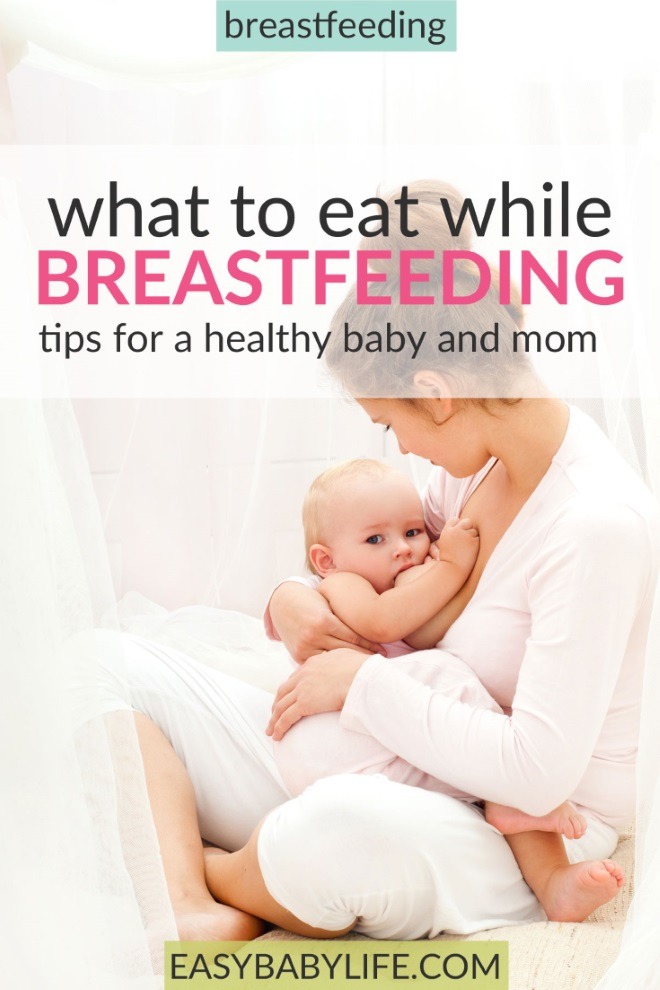
Most foods will not harm your baby, but his or her well-being may be affected. Then there are some foods, , especially some fish, that really should be avoided. And for colicky babies, the breastfeeding mom can make a difference by adjusting her diet.
This article will show you what foods are and aren’t appropriate while breastfeeding and why.
The good news is that the body will more or less produce excellent breast milk no matter what you stuff your body with. (OK, within limits!)
The bad news is that if you follow a really poor diet, your body will be depleted of important nutrients, such as iron and calcium. You might become more tired than necessary; get headaches, experience poor complexion, as well as other issues.
My first piece of advice is to remember to eat food in the first place!
It is very easy not to prioritize eating when you have a baby who wants to be in your arms more or less all the time. So make a choice to eat healthy food or you will almost certainly reach for convenience food such as candy, and other choices that are not that great if you want to feel good and maybe lose some weight!
What To Eat While Breastfeeding (And What To Avoid)
Water
Drink a lot of clean water!
You’ll need this to produce enough milk without becoming dehydrated. And don’t drink large amounts of carbonated water because it often contains unnecessary amounts of sodium.
Whole grain
After giving birth, and especially while breastfeeding, it is easy to become a little bit constipated. To help your stomach, consume water and whole-grain products, and take walks.
Vegetables are often high in fiber and very good to eat while breastfeeding.
Fruits
If you can’t get around to preparing healthy lunches, at least eat some fruits and veggies!
Fruits and vegetables contain fiber, vitamins, water, and in some cases, like bananas, enough calories to help you feel satisfied until you can eat some more substantial food.
Spicy foods
Some moms feel that spicy foods cause tummy pain in their babies. Others don’t notice any difference at all.
But if your baby is a lot fussier one day and you had some really spicy food the night before, this could be the explanation.
Completely disregarding the risk of a fussier baby, some herbs are also to be avoided because they may affect your milk supply in negative ways, and may even be harmful to your baby. These herbs are not so much put in foods, but rather in supplements, like Ginseng, for example. To learn more about which herbs may affect milk supply and how; read this article.
Gassy foods
If your baby tends to be gassy or suffers from tummy pain, it may be wise to exclude foods that are known to increase gas. Such foods are broccoli, cabbage, and Brussel sprouts.
If you believe that your baby may be suffering from colic, excluding all cow’s milk from your diet may help.
However, this really means all cow’s milk, including small amounts of milk powder added to all sorts of foods. If you want to try this, first talk to a pediatrician. And remember that it may take weeks before you see any improvement in your baby. (It can, of course, still be worth trying!)
One study (Maternal Intake of Cruciferous Vegetables and Other Foods and Colic Symptoms in Exclusively Breast-Fed Infants; Journal of the American Dietetic Association Volume 96, January 1996) found a correlation between infant colic and maternal intake of gassy vegetables, cow’s milk, onions, and chocolate.
Fish
While fish, in general, is a great source of omega-3 fatty acids (shown in studies to have a positive effect on your baby’s IQ), some types of fish are high in mercury. I bet you heard about this when you were pregnant.
The easiest way to go is to continue to avoid the same fish you did while pregnant. According to the FDA/EPA guidelines, you should not eat more than 12 ounces a week (about two servings) of canned “light” tuna and other cooked fish. And you should completely avoid shark, swordfish, king mackerel, and tilefish (also called golden or white snapper). Depending on who you ask, some experts would also recommend avoiding tuna steak, Spanish mackerel, marlin, and grouper.
Make sure you check the guidelines where you live, as there may be other fish that you should avoid too that live in the waters close to your home.
Varieties of fish that are safe to eat while breastfeeding is salmon (that live in oceans), rainbow trout, and canned mackerel. Shrimp, pollock, and catfish are also fine.
For more information go to EPA’s Fish Advice Page.
Caffeine
But is it safe?
Well, according to the American Academy of Pediatrics, some caffeine is not likely to affect your baby.
However, large amounts may make your baby fussy, overactive and have problems settling down. This is because it is hard for your baby’s body to get rid of the caffeine, meaning that it tends to build up in his system. So have some coffee if you like, but use it in moderation! Also remember that black and even green tea, chocolate, colas, and other soft drinks also contain caffeine.
Red tea (i.e., Rooibos) is, in my view, a great alternative to coffee and regular tea, as it doesn’t contain any caffeine. Some studies even indicate that the tea may relieve colic.
Alcohol
Does alcohol belong to a list of what to eat while breastfeeding…?
Of course not!
But while you were pregnant, alcohol was really a potential danger for your baby. While breastfeeding, the risk is not at all as high, although some alcohol actually does enter the breast milk.
When you were pregnant, the baby in your stomach would get the same amount of alcohol in his blood as you would, should you have a drink. While breastfeeding, your baby consumes milk containing the same level of alcohol that is in your blood, which means that the baby will consume milk with a very low amount of alcohol. That is a huge difference!
So even though your baby wouldn’t get drunk or even be affected if you have a drink, there are other clear disadvantages of consuming alcohol while breastfeeding or while taking care of a baby in general!
One risk is that you might not be as able to take care of your baby. The risk of dropping him increases a lot, for example.
The other thing is that you sleep heavier after consuming alcohol. Therefore it can be very dangerous to co-sleep with your baby after drinking alcohol. (This is true for dads too!)
Also, there are a few studies indicating that your letdown reflex (milk production) may be impaired after consuming alcohol. One study also found a 23% lower breast milk intake on average by infants after their mom had consumed alcohol. Why this happened was not explained.
If you do want to have a glass of wine or a drink, wait at least two hours before breastfeeding if possible. This way, the alcohol has disappeared from the milk.
Remember to drink a lot of water since alcohol can dehydrate you.
Never ever get drunk while you are responsible for your baby – breastfeeding or not!
Maybe it goes without saying, but consuming a lot of alcohol may very well affect your baby when you are breastfeeding. There are studies that show slower motoric development among babies whose mother consumes alcohol on a daily basis.
Now you know what to eat while breastfeeding – not too hard, right?
Do you smoke?
Find information about the combination of smoking and breastfeeding here.
I hope you will find it useful!
More About Breastfeeding
- The magic components of breast milk
- The taste of the breastmilk and mom’s diet
- Losing weight while breastfeeding

Paula Dennholt founded Easy Baby Life in 2006 and has been a passionate parenting and pregnancy writer since then. Her parenting approach and writing are based on studies in cognitive-behavioral models and therapy for children and her experience as a mother and stepmother. Life as a parent has convinced her of how crucial it is to put relationships before rules. She strongly believes in positive parenting and a science-based approach.
Paula cooperates with a team of pediatricians who assist in reviewing and writing articles.
This information is really good for the women who is breastfeeding his baby. These healthy and useful tips to eat While breastfeeding is considerable for every women which birth a new born baby.