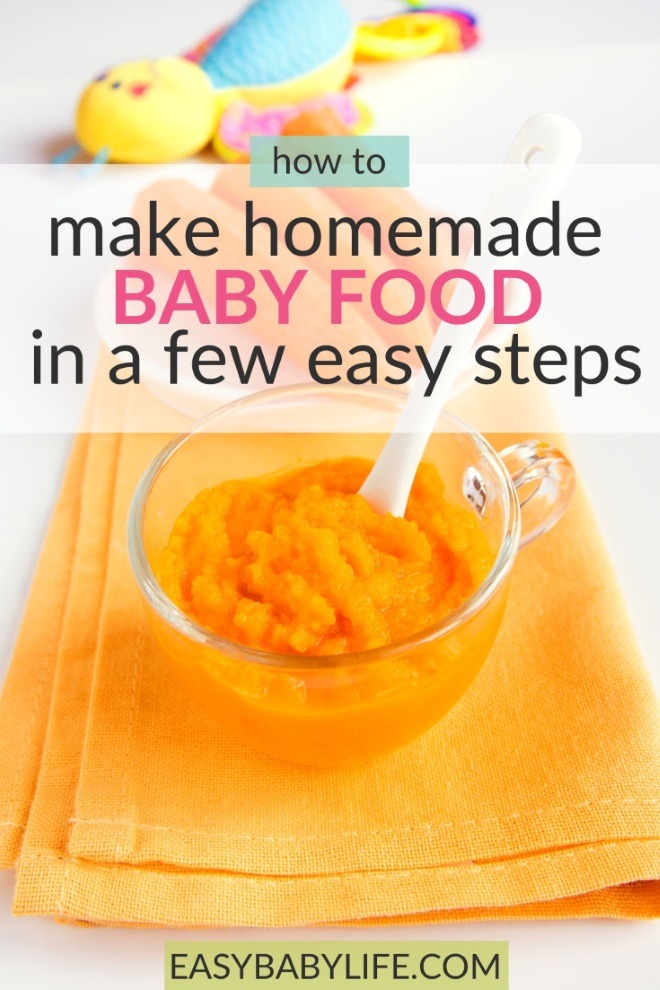
If you think that homemade baby food seems like a good idea, but you’re not sure how to get started in an efficient way, this article is for you!
We are breaking down into easy pieces on how to make baby food without making everything complicated.
Long before the baby food came in jars, mothers were making baby food themselves. Today, with all the discussions about chemically grown foods and added preservatives, many parents are going back to making their own baby food, feeling that this may be a safer route.
Making your own baby food is a simple process and is convenient as well as economically smart. Making your own baby food mostly involves pureeing the foods and keeping track of what are appropriate foods for different ages of your baby.
Of course, it does take longer than opening a jar… But it is more fun too! :-)
So for many, a combination is ideal. Prepare your own baby food as often as you want and combine it with canned food when it’s more practical. Here’s how to make baby food from preparation to storage. Have fun! You’ll find baby food recipes and other tips on feeding your baby solid foods here.
Tips on How to Make Baby Food
Equipment
Making baby food does not require much equipment. Here are some of the things you can use:
- Fork – some foods, such as ripe fruits and bananas, can be prepared using a fork
- Potato masher – works well for cooked foods such as potatoes, carrots, squash, and apples
- Strainer or mesh sieve – used to strain cooked foods
- Blender – a blender can be used to mix vegetables, fruits, and even cereals or peanut butter.
- A baby food mill is great for raw and cooked foods – and is handy to take with you to restaurants or when visiting
Preparing Baby Food
There are several ways in which to prepare baby food:
- Boiling – fruits and vegetables can be boiled or simmered. However, using this method could cause the food to lose some of the important nutrients in the water. It is best to use the least amount of water and the cooking liquid can be used to thin the food if necessary. A crockpot, like this one, is excellent for making baby food as it needs very little water and is great for making large batches and then freezing.
- Microwave – this method is a great way to prepare food quickly without having to use a lot of water, leaving more of the nutrients the baby needs in the cooked product. However, some studies have shown that microwaves also can destroy a good part of the nutrients, so be a little bit cautious with the microwave oven.
- Steaming – the best method of preparing baby food. This can be done by placing vegetables or fruits into a steam basket, a sieve, or a colander over a pot of boiling water and letting the rising steam cook the food. This method helps the food retain almost all of the nutrients so that the baby gets the most out of home-cooked baby food. And it doesn’t take as long as it may seem to steam the food! Since you’re going to puree or mash the food anyway, you can cut the ingredients up into small pieces before steaming them.
Baby Food Storage and Serving Tips
Since homemade baby food is free of the additives and other ingredients necessary to preserve the food for long periods of time, you must be careful when storing it.
If the baby food is not going to be used quickly, it should be frozen. Baby food can be stored in the refrigerator, but only for 2-3 days – and then discard it. While a refrigerator can slow down the growth of bacteria, it does not kill the bacteria, so the baby’s food should not be stored in the refrigerator for too long, usually not for more than two days.
If you wish to prepare larger batches of baby food, you can divide the food into serving sizes and freeze it. There are several ways in which to freeze baby food. You can freeze the pureed food in ice cube trays and then transfer it into a freezer bag; you can place small portions of baby food onto a cookie sheet and freeze that way, placing the individual portions into freezer bags once the food is frozen, or you can purchase individual size freezer bags and freeze right in the bag.
Frozen baby food should be used within one month.
When thawing baby food, you should never leave it at room temperature – this makes it easier for bacteria to get into the food. Thaw the serving by placing it in the refrigerator, in the microwave, or in cold water.
Some Things To Avoid
Some things should be avoided when making baby food:
- Salt and sugar should not be added. Salt is bad for the kidneys, and sugar is bad for the little teeth. Let the baby enjoy the natural taste of foods.
- Honey should be completely avoided in babies younger than one year. Honey can cause serious illness in babies – infant botulism, which is a serious form of food poisoning.
- Other foods are also important to avoid; for a detailed list of foods to avoid for babies, click here.
Good luck with your cooking! Find baby food recipes for the 6-month-old baby here. And for a bit more advanced recipes for the 8-month-old baby, click here.
And for some super inspiring baby food cookbooks, read this post!
For any questions on how to make baby food or sharing your ventures into making baby food, please leave a comment below! :-)

Paula Dennholt founded Easy Baby Life in 2006 and has been a passionate parenting and pregnancy writer since then. Her parenting approach and writing are based on studies in cognitive-behavioral models and therapy for children and her experience as a mother and stepmother. Life as a parent has convinced her of how crucial it is to put relationships before rules. She strongly believes in positive parenting and a science-based approach.
Paula cooperates with a team of pediatricians who assist in reviewing and writing articles.