

Childbirth is intensely painful. Believe me, no matter how many breathing classes you attend or how much relaxation you practice, giving birth will hurt. A lot.
This article will walk you through options for safe and effective medical and natural pain relief during labor and their pros and cons. Having both options is okay.

Having a solid birth plan is always good. However, childbirth and labor pain management is a different story. Many women opt for birthing classes and may at first decide to have no pain relief during childbirth. But there are a lot of things that can happen during labor. It is wise to be educated on possible options before that day comes.
Either way, here is some helpful information about your pain relief options – both medical and natural. You should also write about your pain relief wishes in your birthing plan.
Find a detailed guide to writing your birth plan here.
Safe Medical and Natural Pain Relief during Labor
In this article:
Medical Pain Relief During Labor
Epidural
An epidural is probably the most popular medical labor pain relief option.
An epidural is a procedure where a local anesthetic is injected into the space around the spinal nerves in your lower back. It will take around 15 minutes to start working, but it is then very effective in blocking the labor pain.
Sometimes family members will be asked to leave during the procedure to minimize distractions.
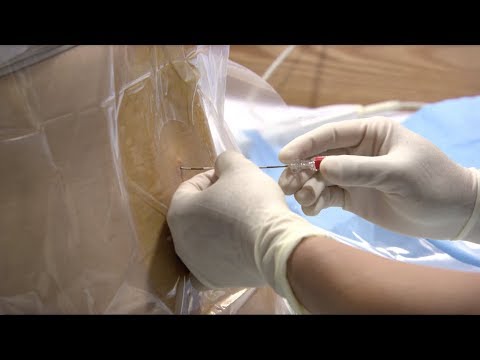
This is how an epidural is given:
- A nurse will stand before you for you to lean on, support you, and give you instructions.
- The anesthesiologist will then tell you to put your head on your chest and bow out your back to separate a space between your vertebrae. He or she will then clean your back with an antiseptic solution.
- After that, they will give you a small shot with a local anesthetic in your back. You will need to be absolutely still, even through any contractions.
- He/she will insert a needle with a catheter that will be hooked up to a machine that can administer the epidural medicine.
- The needle will be removed, leaving the catheter. You will feel a pinch and some pressure during the procedure.
As mentioned, the epidural will begin working in about 15 minutes and will last until the birth is over and the machine is turned off.
In earlier days, it was common that the epidural would numb you from the waist down, making it impossible to stand up or walk. Now a “walking” epidural is the go-to method, removing the pain without paralyzing you.
In most cases, an epidural is a real comfort for the woman in labor. It provides full relief from pain and can help you rest, avoiding the stress and painful experience of labor. It can also help you stay awake and alert during childbirth or C-section. It can be given as early as 4-5 cm cervical dilatation.
However, the epidural can lower blood pressure. The side effects include hypothermia, which results in shivering (anesthesia-related). Improper insertion of the needle into the spine can cause severe headaches and can also lead to spine damage. But anesthesiologists are usually well-trained and equipped with proper knowledge in administering such procedures, so the chances of these scenarios happening are low. Another thing that an epidural does is that it completely numbs you from the waist down. So you won’t know when to push your baby out, making pushing more difficult.
Having a needle inserted deep into your lumbar can certainly seem scary. The video below will show the procedure so you know what to expect. It is a very common pain relief for childbirth, so it is not a high-risk option. And it is quite quick, as you can see.
Spinal Blocks
Spinal blocks are another popular pain relief for childbirth. Like the epidural, a spinal block numbs the lower part of your body to relieve the pain.
A tiny needle will inject the medicine directly into your spine. It is one of the quickest pain relief options, but it only lasts about two hours, and can not be given more than once.
You will have limited mobility, and it causes some women to feel shaky or itchy.
Narcotics
A narcotic such as Fentanyl, Stadol, or Nubain may be given to relieve moderate to severe labor pain. These are all opiate options and offer fast-acting pain relief.
You should know that they may have several side effects for the baby and mom. For example, the mom may experience nausea, vomiting, dizziness, slow heart rate, sedation, cyanosis, and, most importantly, the baby may experience respiratory depression.
Side effects vary between narcotics, so discuss the matter with our doctor to determine the best option.
Laughing Gas
Laughing gas or nitrous oxide can effectively take off the worst edges of the labor pain. However, it will not take the pain away completely. An advantage of laughing gas is that it doesn’t affect your baby. You might need some practice to use it effectively, so start using it before the contractions become completely unbearable.
What you do is that when you feel the contraction coming, you start breathing deeply into the mask. You do so until the contractions fade away.
Since the effect lasts for a little while after you start breathing air again, don’t use the gas through the contraction. Both you and your baby need a lot of oxygen to be in good shape for the next contraction.
Some would probably argue that laughing gas is so mild that it would qualify for pain relief while giving birth naturally. I tend to agree. It gives a very short relief but can certainly help to endure the worst pain peaks without any effects on the baby or mom.
8 Natural Pain Relief Options During Labor
There are also a number of natural ways you can obtain some pain relief for childbirth:
1. Breathing and relaxation
Proper breathing and relaxation are very important. This is very vital in managing your pain naturally. The timing of your breathing and contractions can make a huge difference in your pain management.
Take a breathing class, attend prenatal yoga, or buy a book on the topic and practice at home. It is also beneficial for you to have your spouse involved in these classes to support you during the labor. Acupressure can be quite effective as well.
Also, hot water baths can relieve pain (in a bath before the water breaks or in the shower).
2. Sterile Water Injections
Sterile water injections can be used for curbing back pain during labor.
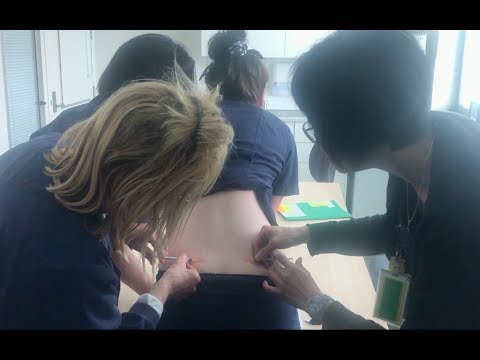
The advantage is rapid relief without the use of drugs. Sterile water is injected into four specific locations at the sacrum or the mother’s lower back at the height of contractions. This may cause stinging pain lasting for 20-30 seconds producing plenty of natural pain relief hormones (endorphins) in the woman’s body. The relief can last for two hours. The procedure can be repeated any number of times.
To be honest, mothers’ views on this type of pain relief vary from “great” to “never again”. Those who say “never again” usually feel that the pain from injecting the water was so bad that it was not worth it. It can be worth trying, though, because it is completely harmless and might be effective.
In this video, a midwife discusses her experience of trying our sterile water injections and why they work. You’ll also see how the procedure is carried out. The midwife is positive to them and doesn’t find them too painful, but experience varies here.
3. Transcutaneous Electrical Nerve Stimulation (TENS)
Using a small apparatus that you can borrow or rent, this method of pain management uses electrodes fitted to the woman’s back and lower part of the belly. The electrodes pass low-voltage electric current into the body. Two theories explain how this method works. One, it stimulates the natural secretion of endorphins, the body’s natural painkillers. And two, it blocks the transmission of pain signals, thereby altering your pain perception during labor.
This method is usually used in the early stages of pregnancy and has no known side effects. The electric current isn’t painful, it is more like a strong tickling, but it is quite effective, particularly in the early stage of labor, which is unpredictable and can usually take long hours. This method can help you rest and sleep.
It can be a bit of a hassle to put the electrodes on yourself, particularly the first few times. Have your spouse help you! And be sure to follow your midwife’s instructions on where to place the electrodes.
In rare cases, burns on the electrode sites and an allergic reaction to the adhesive used on the electrodes have been reported. But aside from these, TENS therapy has been proven safe and effective. Moreover, they are not very expensive, and you can often borrow or rent a TENS apparatus at the hospital.
My personal experience of using a TENS unit is quite positive. I used it in early labor, making this first stage of labor more endurable. It was also nice to feel that I could do something about the pain and somehow control it. It did NOT eliminate the pain; I doubt it would have made any major difference when the labor pain was more intense.
There isn’t much research on the efficiency of TENS in labor, but a few studies, like, for example, this one, indicate that women do assess their labor pain as less severe when using a TENS unit. With literally no side effects, it is certainly worth a try!
4. Heat Therapy
This method uses a heating pad or warm water pack placed on the lower part of your belly or back can help ease the pain a bit. Some hospitals provide these, but make sure to ask in advance! A heating pad can also be great to keep at home to help you during the first stage of labor.
5. Massage
Massaging the lower back or using acupressure is a great way to relieve the pain. This will be most effective if your partner helps you during labor. Massaging your shoulders and upper back can also be great as the pain becomes more intense. In such cases, the massage will help distract from the pain and help you focus on relaxation and breathing. Just have your partner or doula try it.
You might find it helpful – or not.
6. Acupuncture
Acupuncture is also getting increasingly common for pain relief during labor. This is not something you can’t practice yourself, but some hospitals do have access to a certified acupuncturist who can help you. Ask your birthing clinics or hospitals for the availability of these services.
7. Hypnosis
Self-hypnosis is quite a good way to help yourself focus and remain relaxed during childbirth. If you practice a lot before giving birth, you will have an effective tool to keep yourself from panicking and thinking positively.
Self-hypnosis can be taught at various hypnosis training centers or special childbirth classes that teach the technique of repeating positive statements or mantras. You can also try listening to a hypnotherapy podcast to help you feel more relaxed.
8. Waterbirth

Recent studies confirm that giving birth in water may give efficient natural pain relief during labor. For example, women giving birth in water are less likely to ask for an epidural.
Several physiological effects of water birth help explain its beneficial impact on pain. Women who have given birth in water have reported feeling safe, relaxed, and in control – which mitigates labor pain. Also, because of the hydrostatic pressure in the water, the pressure in the woman’s belly is higher, making it easier for the mom to breathe and change position.
Besides, the water makes the pelvic tissues more flexible and elastic, reducing the pain during the contractions.
A new research study on waterbirths and the effects on moms and babies came to the following conclusions:
- Childbearing women experiencing water birth were less likely to ask for pharmacologic pain medication.
- Women experiencing water birth were significantly less likely to experience an episiotomy or a genital laceration
- Women having a water birth were also less likely to experience a fetal heart rate abnormality
- The occurrence of prolonged first and second stages of labor was lower in women having a water birth.
- Other significant findings include fewer shoulder dystocia for water births
- Postpartum hemorrhage was less likely to be diagnosed following water birth
- Babies born underwater were less likely to be transferred to a hospital after birth than babies born on land
- Babies born in water were less likely to require admission to the NICU
- Babies born underwater were less likely to experience respiratory complications than babies born on land
Quite a long list of benefits!
However, as per all the options listed here, there are also a few risks (although rare) when giving a water birth:
- Your baby can breathe in water
- Your baby’s temperature could be too high or too low
- Your baby could have seizures
- You and your baby can get an infection
- The umbilical cord could snap while trying to push the baby out
You can read more about waterbirths here.
And here is a birth story from a natural water birth.
Conclusions on Pain Relief During Labor
No matter how you choose to give birth, it is good to know your options for pain relief during labor and delivery. All of these options are considered safe for mothers during labor. Each one has its advantages and risks. Only you can choose what is right for you.
Learn more about giving birth here.
And to read childbirth stories, click here.
What pain relief options do you opt for? Why? I’d love to hear your thoughts!
References for Pain Relief During Labor
- Pharmacological and Non-Pharmacological Methods of Labour Pain Relief—Establishment of Effectiveness and Comparison
- Women’s experiences of pharmacological and non-pharmacological pain relief methods for labour and childbirth: a qualitative systematic review
- Transcutaneous Electrical Nerve Stimulation (TENS)
- Sterile water injections for the relief of pain in labour
- Intracutaneous Injections of Sterile Water over the Secrum for Labour Analgesia
- Medications for Pain Relief During Labor and Delivery

Paula Dennholt founded Easy Baby Life in 2006 and has been a passionate parenting and pregnancy writer since then. Her parenting approach and writing are based on studies in cognitive-behavioral models and therapy for children and her experience as a mother and stepmother. Life as a parent has convinced her of how crucial it is to put relationships before rules. She strongly believes in positive parenting and a science-based approach.
Paula cooperates with a team of pediatricians who assist in reviewing and writing articles.






I pushed very once, I gave birth to twins