Waiting and waiting and waiting… Will labor and delivery never start?! Maybe it is time to try to induce labor naturally and give nature some help…?
Waiting for labor to start can be a real pain. Trying to interpret every possible sign of labor starting and just being heavy and impatient.
Is it driving you insane? Well, you’re not alone.
But if your baby and your body are ready (you need to consult your OB-Gyn about that), there are actually ways to naturally self-induce your labor. No satisfaction is guaranteed, but a lot of women have found one or several of these methods effective (myself included).
And for those of you overdue and “at risk” for medically induced labor within a few days, trying a few natural ways to get labor started is definitely a good way to spend the time instead of just waiting (again, ONLY if it is safe, according to your doctor).
I must admit I did try inducing labor when I was pregnant with my daughter. I was not overdue, but very much due to give birth. I almost gave birth in week 25 but was – against all odds – still carrying my baby in week 38. When I started to get minor contractions again for what felt like the thousandth time, I decided to see if I could help nature on its way. (And yes, it was OK by my doctor.) I tried walking and nipple stimulation, and maybe something else I can’t remember. And… gave birth the same day. I probably would have, anyway. But who knows..?
Now, here are some possible ways to induce labor naturally and why they may or may not work.
8 Ways To Induce Labor Naturally
- Walking
- Nipple Stimulation
- Acupressure and Body Massage
- Making Love
- Certain Foods
- Certain Herbs
- Castor Oil
- Folklore
1. Walking
Walking is one of the most common methods to induce labor. It is often also encouraged after labor has started to help the body relax during the contractions. Many pregnant women (but of course not all) can still go for shorter walks late in pregnancy.
While not really supported by many studies, the theory is that walking may help gravity pull down the baby near the birth canal. But it has to be at a relaxed and steady pace only. You can also try other non-impact exercises like swimming, stretching, pilates, or even walking up and down the stairs. Just don’t overdo it. You need some energy (or, well, a lot…) to give birth.
2. Nipple Stimulation
Nipple stimulation for inducing labor naturally is also recommended. This is done to let the body produce oxytocin, a hormone that causes the contraction of the uterus. The procedure is to stimulate every 15 to 30 minutes for several hours.
Studies have shown significant benefits from nipple stimulation in women whose cervix had already started to soften, thin, and open, ready for labor. One study showed that 37% of women who had tried nipple stimulation went into labor within 72 hours as compared to just 6% of those who had not. Sounds quite powerful!
However, it is only recommended for normal pregnancies, not for high-risk ones, since there are no studies on the effects in high-risk pregnancies.
3. Acupressure and Body Massage
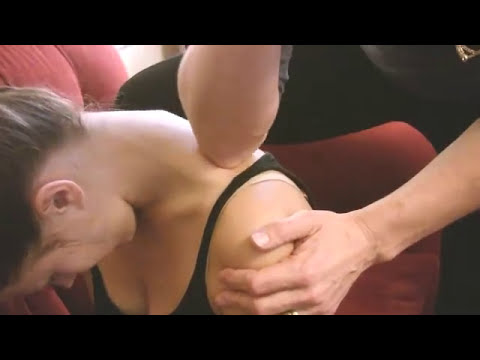
While on the topic of stimulation, you can also try acupressure and body massage. The American Chronicle cited that this is already scientifically proven to help labor. This is done by applying pressure to sensitive parts of the body, thus resulting in stimulating contractions. On the other hand, a research study from 2017 concluded only weak positive effects, mainly a benefit from acupuncture in improving cervical readiness for labor as measured by cervical maturity within 24 hours.
To learn how to use acupressure for inducing labor, watch this instructive video:
4. Making Love
Being said that, stimulating sensitive parts of the body will help; you can consider this the best-ever method for inducing labor naturally – making love!
This is said by parents to help – a lot! But there is not much scientific evidence. For example, a study from 2019 (see below) found no increased incidence of labor onset due to sexual intercourse.
In theory, though, oxytocin is released during lovemaking, and this can help you contract your uterus. The orgasm may help to activate the uterus. And finally, there are prostaglandins found in the sperm; this will soften the cervix readying it for the labor ahead.
Remember that making love during pregnancy is allowed as long as it is still comfortable (well, to some degree..) to you and, of course, your water has not broken yet, you are not bleeding, and your midwife or OBGyn have not instructed you to avoid sex for any reason (such as a low-lying placenta).
5. Certain Foods
Let us now talk about the yummy part, the food that has been said to help out in inducing labor naturally.
Are there actually foods that can induce labor?
Well, there have been rumors that, for example, Skipolini’s Pizza in California and Scalini Restaurant in Georgia actually served foods that helped their overdue women go into labor. Don’t book a trip, though! In addition to mere coincidence, it has been found out that their common herb ingredients, basil, and oregano, might actually have played a minor role. Basil and oregano are said to stimulate labor contractions. (Read more about herbs below.)
There are also other foods and fruits that some women believe can help induce labor naturally, other than pizzas, like spicy foods – the hotter, the better, and tropical fruits like pineapple, mango, and papaya. Some women claim that this helped them, but nothing has been verified by scientific studies.
6. Certain Herbs
In addition to basil and oregano, other herbs are also said to do the same thing as Blue or Black Cohosh, Goldenseal, Squaw vine, Red Raspberry Leaf, Crampbark, False Unicorn Root, Motherwort, and Evening Primrose Oil. There are, however, not many scientific findings to back up the efficacy of the use of these herbs.
7. Castor Oil
Castor oil is actually an old Egyptian method to induce labor. And it seems to work, although with side effects.
A study of 100 women indicated that 57.7% went into labor after taking a single dose of 60ml of castor oil, as opposed to while 4.2% of those who didn’t. The drawback, though, is that all the women who took castor oil became nauseous.
If you want to try this, make sure you discuss it with your midwife first!
8. Folklore
Dr. Jonathan Schaffir, a clinical assistant professor of OB-Gyn at Ohio State University, conducted a study on labor-inducing folklore. (Reference below.) He surveyed more than 100 pregnant women, asking them the 10 most common myths about inducing labor, and the results are: walking, making love, strenuous exercise, use of castor oil, nipple stimulation, eating spicy foods, fright, starvation, having an enema and drinking herbal tea.
I just cannot imagine how fright, starvation, and having an enema would help. What about you, will you try one of these?
Takeaway
As you can see, there are a few scientifically proven ways to induce labor naturally. Nipple stimulation, lovemaking, and acupressure are your best bets – and they do seem to work in some cases!
An interesting study cited below asked 663 women what caused their labor to start. Of the women who reported a specific labor trigger, 32% reported physical activity (usually walking), 24% a clinician-mediated trigger, 19% a natural phenomenon, 14% some other physical trigger (including sexual activity), 12% reported ingesting something, 12% an emotional trigger, and 7% maternal illness.
So again, e.g. walking or making love may be good options to try.
Good luck!
(And please let us know your experiences by leaving a comment below!)
Read Next
- The Exciting Signs Of Labor
- Labor Pain – Why Does It Have To Hurt?
- Medically Induced Labor – Why And How
- Useful Childbirth Videos
Research References
- Schaffir J. Survey of folk beliefs about induction of labor. Birth. 2002 Mar;29(1):47-51. doi: 10.1046/j.1523-536x.2002.00047.x. PMID: 11843789.
- Smith CA, Armour M, Dahlen HG. Acupuncture or acupressure for induction of labour. Cochrane Database Syst Rev. 2017 Oct 17;10(10):CD002962. doi: 10.1002/14651858.CD002962.pub4. PMID: 29036756; PMCID: PMC6953318.
- Bovbjerg ML, Evenson KR, Bradley C, Thorp JM. What started your labor? Responses from mothers in the third pregnancy, infection, and nutrition study. J Perinat Educ. 2014 Summer;23(3):155-64. doi: 10.1891/1058-1243.23.3.155. PMID: 25364220; PMCID: PMC4210668.
- Carbone L, De Vivo V, Saccone G, D’Antonio F, Mercorio A, Raffone A, Arduino B, D’Alessandro P, Sarno L, Conforti A, Maruotti GM, Alviggi C, Zullo F. Sexual Intercourse for Induction of Spontaneous Onset of Labor: A Systematic Review and Meta-Analysis of Randomized Controlled Trials. J Sex Med. 2019 Nov;16(11):1787-1795. doi: 10.1016/j.jsxm.2019.08.002. Epub 2019 Sep 11. PMID: 31521572.
If you’ve tried or want to try inducing labor naturally, what method would you use? Share by leaving a comment!

Paula Dennholt founded Easy Baby Life in 2006 and has been a passionate parenting and pregnancy writer since then. Her parenting approach and writing are based on studies in cognitive-behavioral models and therapy for children and her experience as a mother and stepmother. Life as a parent has convinced her of how crucial it is to put relationships before rules. She strongly believes in positive parenting and a science-based approach.
Paula cooperates with a team of pediatricians who assist in reviewing and writing articles.