
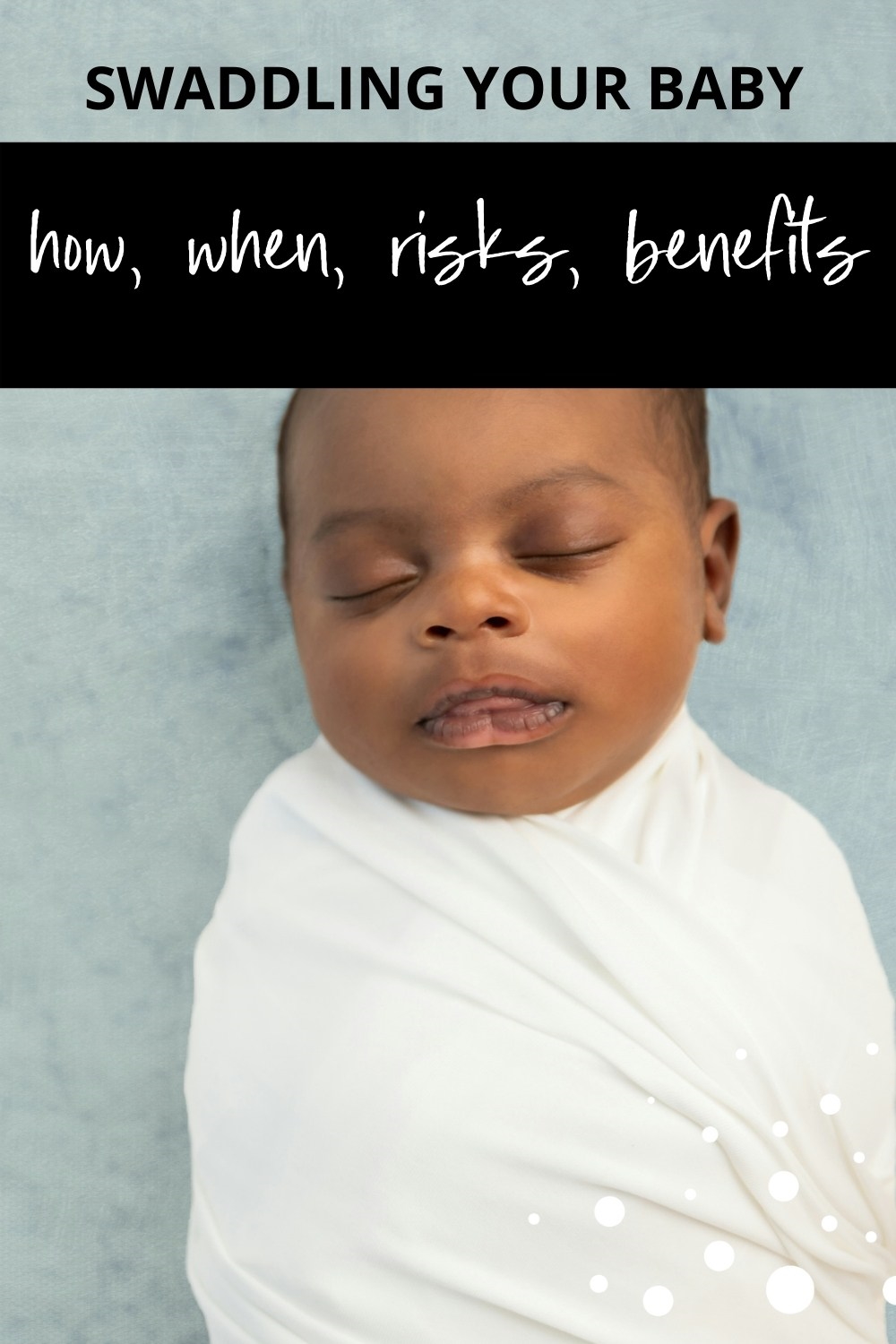
Swaddling your baby, – does that seem weird to you?
It sure did to me before I had my first child. I thought that swaddling a baby was something that parents did back in the 18th century or so. And, of course, they did, but to some extent for other reasons.
The truth is; many newborn babies love being swaddled! Want to know why that is and how to do it? Another common question is when and how to stop swaddling when the time comes.

Your Guide to Swaddling Your Baby
In this article:
Why to swaddle your baby
Swaddling a baby today is not to prevent crooked legs (completely unnecessary for that) but to make your baby feel calm and safe. The crooked legs reason was something parents believed in many years ago.
During their first one or two months of living, babies go through a huge adaptation from life inside to outside the womb.
Think of it, in the womb, it was dark, warm, and narrow. In the “real” world, it is light, much colder, and airy. Scary!! In addition, babies haven’t yet learned how to control their limbs (or even realizing that the things flying back and forth in front of their eyes are actually their hands…).
Therefore many babies can be quite disturbed, especially when trying to fall asleep, by their flying limbs. Swaddled, your baby may feel calmer and safer.
Swaddling Benefits
Better sleep
If swaddling is done correctly, it can be an effective technique to promote sleep. Newborns are often woken up by their own startle reflex (which is completely normal). Swaddling may help a baby sleep better by securing their arms and preventing involuntary movement. And when your baby sleeps better, you also sleep better and longer.
Soothes and calms
Swaddling may soothe and calm your little one. Some experts say that swaddling helps recreate the feeling that the baby had in the womb. In addition, research has shown that swaddling is effective in soothing crying babies. One study showed that swaddling decreased crying by 42% in babies eight weeks old or younger. However, this method didn’t work with infants older than eight weeks.
However, your baby shouldn’t be swaddled all day long as they must be able to move freely to practice their gross motor skills and use their hands to explore. During the awake time, you can practice other soothing techniques.
It helps baby stay in a safe sleeping position
According to some experts, swaddling increases the likelihood that the baby will sleep on the back, which is the safest sleeping position.
Some babies don’t like sleeping on their backs and may resist or wake up often. This leads to parents feeling discouraged, exhausted, and frustrated. Experts who encourage swaddling say that since swaddling helps recreate the feeling from the womb, babies are calmer and sleep better on their backs. That makes it less likely that the exhausted and desperate parents will put their babies to sleep on their stomachs in hopes of getting a bit more sleep.
If a baby sleeps better, it also decreases the chance of parents falling asleep with their baby on a risky surface, such as a sofa, an armchair, or even an adult bed.
Swaddling risks
Swaddling and SIDS
In 2016, a research paper was published on a possible connection between swaddling and SIDS. This research was a result of a review of four previous studies spanning over two decades. After it came out, some headlines suggested that swaddling increases the risk of SIDS. However, many experts reacted and explained that the findings of the study don’t show that swaddling, on itself, increases the risk of SIDS.
As many parents already know and experts emphasize, infants should always be placed on their backs to sleep to reduce the risk of SIDS—and this study confirmed it. Side and stomach sleeping should be avoided at all times because both significantly increase the risk of SIDS.
This risk is even higher for babies who are swaddled when sleeping on their stomachs or side.
This study also showed, like many others, that babies shouldn’t be swaddled after a certain age.
The authors of the research in question also emphasized that it was hard to draw conclusions because the studies they were comparing were too different. They conclude that the results of their meta-analysis don’t show that swaddling increases the risk of SIDS but rather that more evidence is needed.
All of this points to the conclusion that swaddling has some risks, but if it is done following safe sleeping guidelines and discontinued at an advised age, these risks are minimal.
Hip Problems
When swaddled, your baby’s legs are kept together and straight, which may increase the risk of hip problems. Wrapping the baby too tightly increases the risk of hip dysplasia, which means that the hip doesn’t develop properly because the bones of the hip joint aren’t aligned properly.
Because developmental dysplasia of the hip usually doesn’t cause pain in babies, it may be hard to notice. Untreated hip dysplasia may lead to more serious problems as the child gets older.
Hip problems can be avoided if the babies are swaddled properly. The baby’s legs shouldn’t be pulled straight and swaddled tightly together. Instead, they should be wrapped loosely enough for their legs to be able to bend up and out at the hips because this position allows the natural development of the hip joints.
Loose blankets and suffocation
If swaddling isn’t done properly, a swaddling blanket may come unwrapped, covering your baby’s face and increasing the risk of suffocation.
Overheating
Always keep in mind that swaddling adds another layer of ”clothing”. Make sure your baby isn’t over-dressed under the wrap, as it may lead to overheating.
Some signs of your baby being too hot are sweating, damp hair, rapid breathing, flushed cheeks, and a heat rash. It is advisable to use a lightweight cotton or muslin wrap because it is soft, breathable, and not too firm.
When to swaddle a baby
Sleep and awake time
As mentioned previously, it is recommended not to swaddle your baby when they are awake. If the baby is swaddled when they are awake and alert, it may hinder their motor development. The baby must be able to move freely and explore using their arms and legs.
Furthermore, when swaddling is only used for naps and night sleep, your baby will start recognizing the process of being wrapped as a sign that sleep is coming.
Swaddling and feeding
Swaddling is not recommended during both breastfeeding and bottle feeding for several reasons. First, when your baby is breastfeeding or bottle feeding, they use their arms. It is shown that, when they are breastfeeding, babies use their hands to find the nipple, promote let down, and help with position and latch.
Many parents notice their babies sucking on their fists before feeding, which is also one of the cues showing that they are hungry, and swaddling makes it impossible for babies to do that.
Furthermore, swaddling calms the baby and makes them sleepy, which may lead to a baby eating while half asleep, making it harder for them to focus on eating and getting a solid feed.
Although burping a swaddled baby is possible, it may be harder to get that air out when the baby is swaddled.
How to Swaddle Step by Step
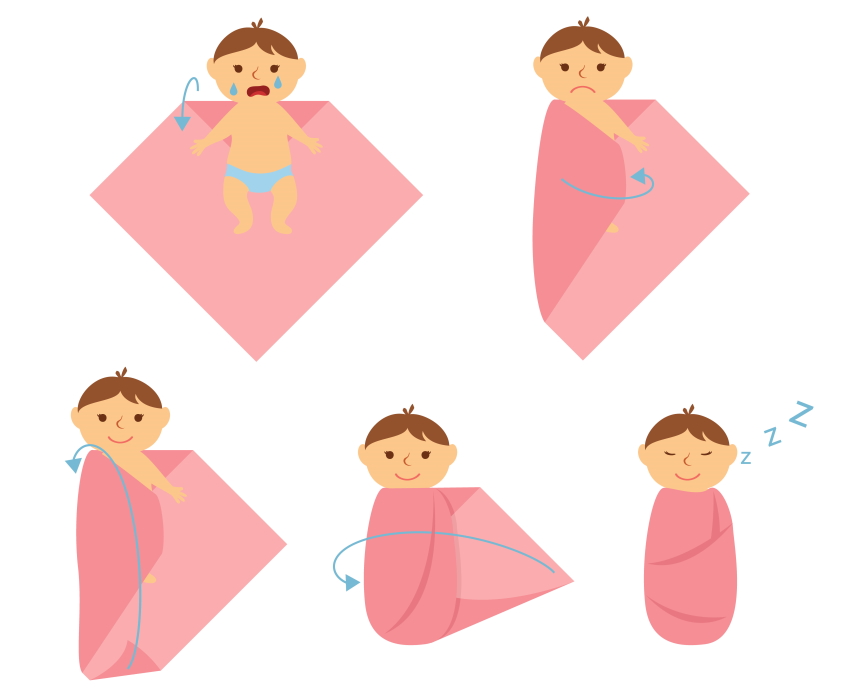
- Put a soft, lightweight cotton or muslin wrap on a flat surface. Place the wrap in a diamond shape, with one corner pointing towards you. Fold down the top corner a little bit.
- Put the baby in the middle of the blanket, face-up, with their head above the fold. Baby’s feet should point towards you. Do not cover your baby’s face or head.
- Put your baby’s right arm down by their body, then wrap the right corner over that arm and the body and tuck it under their back beneath their left arm.
- Fold the bottom of the wrap loosely and bring it up over your baby’s feet. If the swaddling blanket is long, once you bring it up over your baby’s legs, tuck it underneath their back.
- Put their left arm down by their side, take the left corner, wrap it over the left arm and the body, and tuck it under their back on their right side.
- If you want one or both of your baby’s arms to be free, just swaddle them the same way, but under the arm(s).
If this sounds difficult, there are now super practical and super cute swaddlers on the market.
If using it, you don’t need to learn how to swaddle the old-fashioned way. Just put your baby in and zip it. Really brilliant!
Here is a video clip showing how to swaddle a baby:

Swaddling Safety Tips
- Make sure your baby is not over-dressed or that the room is not too warm to prevent overheating. Swaddling is not recommended if your baby is sick or has a fever, as it helps retain body heat, which may worsen things.
- Swaddle your baby firmly but not too tightly. You should be able to put two to three fingers between the wrap and your baby’s chest so that your baby’s chest can rise normally during breathing.
- Make sure there is enough room for your baby’s legs to bend up and out at the hips. Don’t swaddle the baby with their legs pressed together and straight down.
- Don’t swaddle above your baby’s shoulders. The baby’s neck and head should never be swaddled.
- Ensure that the wrap won’t get loose, as loose blankets in the crib pose a risk of suffocation.
- Always place your baby on their back to sleep (even when they are not swaddled).
- Stop swaddling your baby when they show signs of trying to roll over.
When to Stop Swaddling
Swaddling should be stopped once the baby starts showing signs of trying to roll over.
According to the American Academy of Pediatrics, you should stop swaddling altogether when your baby is 2 months old. Even though many babies first roll over when they are 3-4 months old, it is advisable not to wait until it happens but stop swaddling before that. Some babies can use their upper body and head to roll onto their stomach despite being only eight weeks old.
Furthermore, as babies get older, they get stronger, which makes it more likely that they’ll break out of the swaddle, resulting in loose bedding in the crib. Also, the older they get, the more frustrated they will be if they can’t freely move.
However, some experts emphasize that most babies do best when the swaddling lasts until they are 4 to 5 months old. This is because the startle reflex starts decreasing after around 2 months and disappears sometime between 2 and 6 months, very often when your baby is 4 or 5 months old. But swaddling this long is impossible if a baby starts rolling over earlier.
As with many other things in parenting, the parents should decide for themselves after considering all the risks and benefits. There are also some alternatives to traditional swaddling that may be tried out.
How to transition out of a swaddle
Some parents take the cold turkey approach, remove the entire wrap at once, and see how the baby reacts. This is definitely possible with some babies who may be completely unbothered by it. Some babies will adjust instantly without many issues, while for others, it may take some time.
It is also possible to do the transition gradually. To do that, start by swaddling your baby with one arm in the swaddle and one arm out. After a couple of nights, once the baby gets used to it, proceed by swaddling with both arms out and practice this for a couple of nights. Eventually, stop using the swaddle blanket altogether.
Another option is to replace the swaddle blanket with a sleeping sack. Sleeping sacks still provide warmth and comfort, but your baby’s arms will be free, and they will have more room to move their legs.
Alternatives to Swaddling
Sleepsuits and sleeping sacks
Sleepsuits and sleeping sacks will keep your baby warm and comfortable while offering more room for their legs to move around. In addition, this option frees up the baby’s arms, which may work great for babies who don’t like their arms being constrained in a swaddle. It also removes some of the risks that come with swaddling in case your baby rolls over.
Calming techniques
Some babies won’t like being swaddled, and it won’t calm them. Therefore, it is important to practice other calming techniques, such as placing a hand on their chest, gently rocking your baby, calming them on their side or stomach but placing them on their back again when they are asleep, skin-to-skin contact, etc.
White noise
White noise can be really useful. While your baby was still in the womb, they would hear constant noises, such as your heartbeat or the swishing of amniotic fluid.
White noise machines usually offer an array of sounds so that you can pick which suits your baby the best. There are also several white noise apps that you can use on your phone, which may be very practical sometimes.
Bedtime Routine
A bedtime routine is really important, whether your baby is swaddled or not. Setting up a routine that reduces stimulation and helps your baby relax and calm down is a way to prepare your baby and send them a signal that sleep time is near.
Other products
Some products on the market, such as Zipadee-Zip, claim to offer the comfort that the swaddling provides, but with more freedom of movement for the baby. Products like these should also eliminate the possibility of the baby being wrapped too tight. It is always recommended to inform yourself, read other parents’ reviews, and compare several products before deciding if and which may be helpful for you and your baby.
Good luck and sweet dreams! And do share your thought on swaddling a baby by leaving a comment below! :-)
And please visit my Baby Sleep Section for many more practical baby sleep tips! :-)
Read Next
- Safe Co-Sleeping with Your Baby or Toddler? Risks and Benefits
- Your Baby’s Sleep Pattern Month By Month: Newborn to 1 Year
- Baby Sleeps on Belly When Rolling Over Asleep! 7 Safety Tips
Research References
- Swaddling and hip dysplasia: an orthopaedic perspective
- Franco, P., Seret, N., Van Hees, J., Scaillet, S., Groswasser, J., & Kahn, A. (2005). Influence of swaddling on sleep and arousal characteristics of healthy infants. Pediatrics, 115(5), 1307-11. DOI: 10.1542/peds.2004-1460.
- Swaddling and SIDS: About that alarming study … | CNN
- Swaddling and the Risk of Sudden Infant Death Syndrome: A Meta-analysis | Pediatrics | American Academy of Pediatrics (aap.org)
- Infant crying and the calming response: Parental versus mechanical soothing using swaddling, sound, and movement

Paula Dennholt founded Easy Baby Life in 2006 and has been a passionate parenting and pregnancy writer since then. Her parenting approach and writing are based on studies in cognitive-behavioral models and therapy for children and her experience as a mother and stepmother. Life as a parent has convinced her of how crucial it is to put relationships before rules. She strongly believes in positive parenting and a science-based approach.
Paula cooperates with a team of pediatricians who assist in reviewing and writing articles.






It was really helpful when you mentioned that swaddling a baby can make it feel safe and calm. My wife and I recently had our first child, and he is having a hard time sleeping at night because of the loud road near our home. It might be a good idea for us to swaddle our baby when we are trying to get him to sleep so that he can feel safe.