Did you know that some plastic baby equipment can be poisonous to some degree?
Learn here why that is and how to protect your baby from BPA by choosing and using the right plastic baby products.
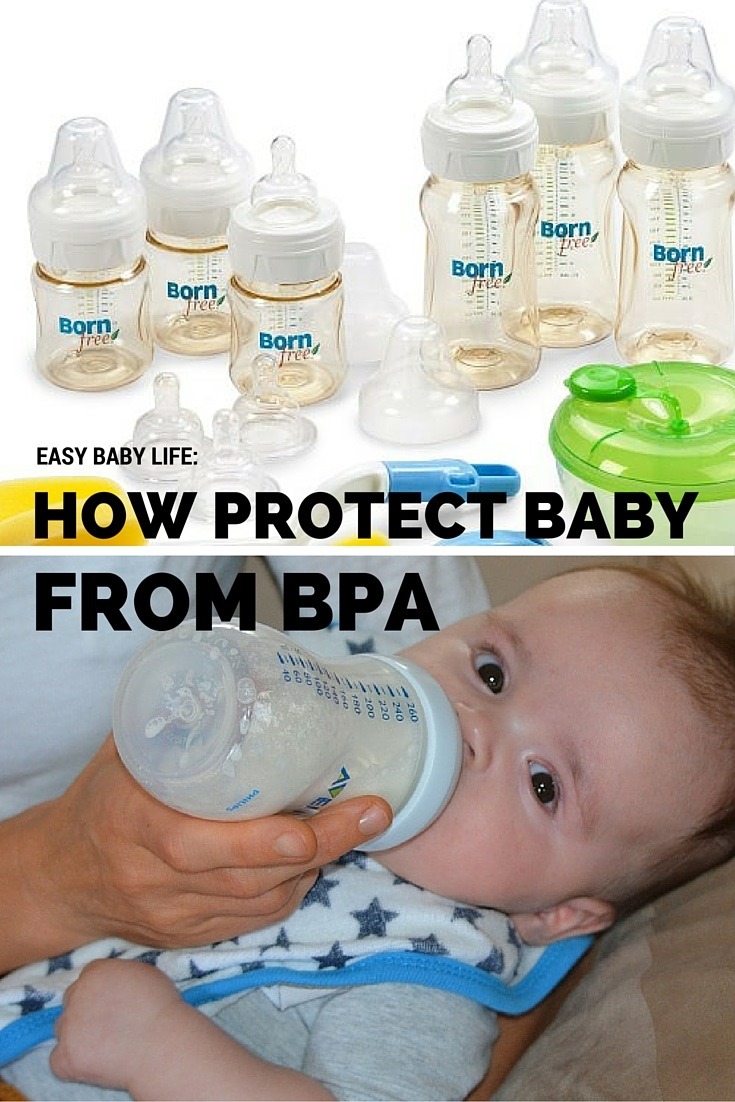
This article is written by Chris, a new dad who is contributing to his thoughts about being a new dad.
A few years back, I thought all baby bottles were safe until I made a little shopping mistake. I was at Babies R’Us with my daughter to pick up some sippy cups. I was proud of my purchase until I got home, and showed my wife only to be scolded for not buying BPA-free cups.
I thought my wife was over-reacting until I got online later that night and realized what BPA really was. I had no idea your everyday plastic baby bottle and sippy cup could be considered unsafe for your baby. But they certainly can.
Make sure you use safe baby equipment the next time feed your infant!
Guide to Using and Choosing Safe Baby Products
- What is the deal with BPA?
- Why your baby equipment may be unsafe?
- What you can do to protect your baby?
What is the deal with BPA?
Earlier this year, the Food and Drug Administration released a report raising concerns about the possible adverse effects of BPA (Bisphenol-A). BPA is a chemical compound found in plastics, used widely in products such as baby bottles and food containers. In addition to the FDA, many consumer safety groups warn of BPA in baby bottles.
BPA has been in use since the 1930s. It has been completely legal almost worldwide until Canada became the first country to restrict its usage in baby bottles in 2008.
Today, plastic baby bottles manufactured by American companies no longer contain BPA. That’s because in 2009 the six major manufacturers of baby bottles and sippy cups stopped making their products with BPA. And in 2012, the U.S. Food and Drug Administration (FDA) banned BPA in the manufacture of all baby bottles and sippy cups.
So at least baby bottles in the US is now safe – unless you have some old bottle that you still use!
But then why worry?
Why your baby equipment may still be unsafe?
BPA is also used widely in the linings of formula cans, toys, water bottles, and dental sealants. Experts believe the BPA chemical is most dangerous when it reaches into the baby bottle, and gets into the food or liquid consumed by babies, and this is why BPA is now prohibited in at least the US in baby bottles.
While not a lot of research can tell us the effects of BPA on humans, studies on animals suggest it may be dangerous to brain development, the reproductive system, and the immune system. Experts from the Environmental Protection Agency (EPA) strongly believe BPA levels currently found in humans are higher than the levels found to cause problems in the studies on animals.
What you can do to protect your baby from BPA?
Experts suggest some of the following steps can be taken to reduce your baby’s exposure to BPA:
- Breastfeed your baby in order to avoid BPA in bottles and formula can liners – especially if you live somewhere where BPA is allowed in baby bottles.
- If you bottle-feed, use glass bottles or BPA-free bottles. Find BPA free brands and products here at Amazon.
- If you formula feed, use a powdered brand.
- When your plastic baby bottles and sippy cups turn cloudy, scratched, or cracked, throw them away unless you are sure that they are BPA free.
- No plastic cups, bottles, sippy cups or food containers in the dishwasher or microwave!
- When buying any plastic bottles, sippy cups or food containers, look at the code on the bottom of the containers. Avoid purchasing ones labeled with the number 7 (they contain BPA), number 3 (they may contain phthalates – another possible contaminant) and number 6 (they may contain styrene – same).
More On Bottle Feeding
- Tips For Bottle Feeding You Baby Day And Night
- Weaning From Bottle To Sippy Cup
- Bottle-Feeding, Formula And Baby Tooth Decay
References
- EFSA Europe on Bisphenol
- Bisphenol A (BPA): Use in Food Contact Application
- http://en.wikipedia.org/wiki/Bisphenol_A

Paula Dennholt founded Easy Baby Life in 2006 and has been a passionate parenting and pregnancy writer since then. Her parenting approach and writing are based on studies in cognitive-behavioral models and therapy for children and her experience as a mother and stepmother. Life as a parent has convinced her of how crucial it is to put relationships before rules. She strongly believes in positive parenting and a science-based approach.
Paula cooperates with a team of pediatricians who assist in reviewing and writing articles.